.png)


Feeding Tube: It Saved Her Life in the Early Years and Sustained Her Life in the End


This is a hard post to write. But it is an important one.
Halle is the one who made me a mom.
Her start in life was beyond difficult. She was born early, a tiny 35-weeker, and far sicker than anyone expected. She struggled to breathe, and feeding was a challenge from the beginning. In the NICU, she was fed through an NG tube (nasogastric tube), a small tube that went through her nose into her stomach, typical for a preemie. She was our little fighter and was discharged in less than three weeks.
In the final days of that hospital stay, they began transitioning her to a bottle. Something in me knew she wasn’t eating safely. But I was a new mom ... what did I know? The doctors and nurses told me to relax. They said she was picking up on my nervous energy.
But at every feeding she gurgled, spit, and seemed to choke. I was terrified. I would shake and pray she would swallow safely. Still, we were assured she was fine to go home, no tube, no monitors.

The feeding struggles continued. She arched her back and cried. She seemed afraid of the flow of formula and honestly, so was I. Her face broke out in bumps. We were both a mess.
Then, around two months old, she choked so severely that we rushed her to the ER. Her oxygen saturation was 78 upon arrival. She was in distress and again so was I. She was transported immediately to the children’s hospital.
A swallow study revealed she was aspirating with every feeding. She had developed pneumonia. All those dismissals ... all those reassurances ... were wrong. She was not safe.
An NG tube was placed again, and we were referred to GI. By four months, a repeat swallow study showed improvement. Halle appeared to be swallowing safely, and we were told she could return to the bottle. I wasn’t confident but we agreed to try.
The NG tube was removed. All seemed normal… until it wasn’t.
By five months, we had moved from Florida to Tennessee and were now at Vanderbilt Children’s Hospital. Halle was on an apnea monitor for nighttime episodes. Soon, alarms began sounding during feedings. Her heart rate was dropping dangerously low. We planned to discuss it at her appointment the next day.
We never made it to that appointment. That night she choked so severely we struggled to clear her airway. John held her over the sink with the suction machine while I called 911. It rang. And rang. And rang. No one answered.
I hung up and called the pediatrician’s emergency line. Their office was just one mile away. They immediately picked up and said, “Bring her in. We have a crash cart ready.”
By the time we arrived, John had cleared her airway, but she was limp and needed urgent care. This time, the doctors took her feedings seriously. She was admitted to the hospital that day and underwent extensive testing.
We learned she was aspirating again and that her stomach muscle wasn’t working. Within a week, she underwent major surgery: a Nissen fundoplication to reinforce the top of her stomach, and placement of a G-tube directly into her abdomen. Everything happened so quickly. John and I had no time to process the magnitude of the decisions we were making. These were life-altering procedures. Permanent changes to her tiny body. But they were necessary.

The night before surgery, John realized something that caught us both off guard: her tummy would never look the same. She would have scars. Her perfect baby skin would be changed. We took a photo. I found that picture this morning and wept quietly. That image captured the moment before everything shifted.
That G-tube gave Halle life. At five months old, she weighed just nine pounds. After surgery, we were finally able to give her the nutrition she needed, not just to survive, but to thrive. And thrive she did. Within a week, we saw her energy return. She grew. She rolled. She babbled. Her personality began to emerge.
Halle had that feeding tube for three years, until we were confident her body could swallow safely. It took time for her muscles to strengthen and her airway to stabilize, but she got there. At three and a half years old, we took her to the Kluge Encouragement Feeding Program. In just under two weeks, she went from 100% tube-fed to 0% tube-fed.
And we discovered a whole new side of Halle: curious, joyful, delighted by flavors and textures.
That feeding tube saved her life. It gave her nutrition. It gave her time. It gave us our sweet Halle Grace.

Fast forward eleven years.
Halle was fourteen and weighed only 75 pounds. For two years she had struggled with severe GI issues. The summer before high school, she was diagnosed with gastroparesis, her stomach could no longer digest food properly. What we didn’t yet know was that her entire body was beginning to shut down. She had entered the final year of her life.
That summer we were told she could no longer digest solid food and that was the source of her constant pain. Her body simply couldn’t process it. She needed a fully liquid diet. Ensure Clear became her companion. But drinking enough calories during the day was nearly impossible. Once again, we faced the question of a feeding tube.
If we placed another tube, she could receive continuous nutrition overnight, giving her body what it needed. This time, we let Halle decide.

Two weeks before school started, she had surgery for her second feeding tube. She was willing to do anything for the chance to start high school. As was often the case, nothing came easily. The tube dislodged twice, requiring another surgery just days before school began. She would have to start late
.
“No worries,” she said. “Just get me there by day three. That’s when all the schedules are set anyway.”
I assumed there was no way she’d be ready. It was her second surgery in two weeks.
I underestimated her. Halle negotiated with her GI doctor: since she would only attend half days, could she be discharged in time for school the next morning?
They agreed.
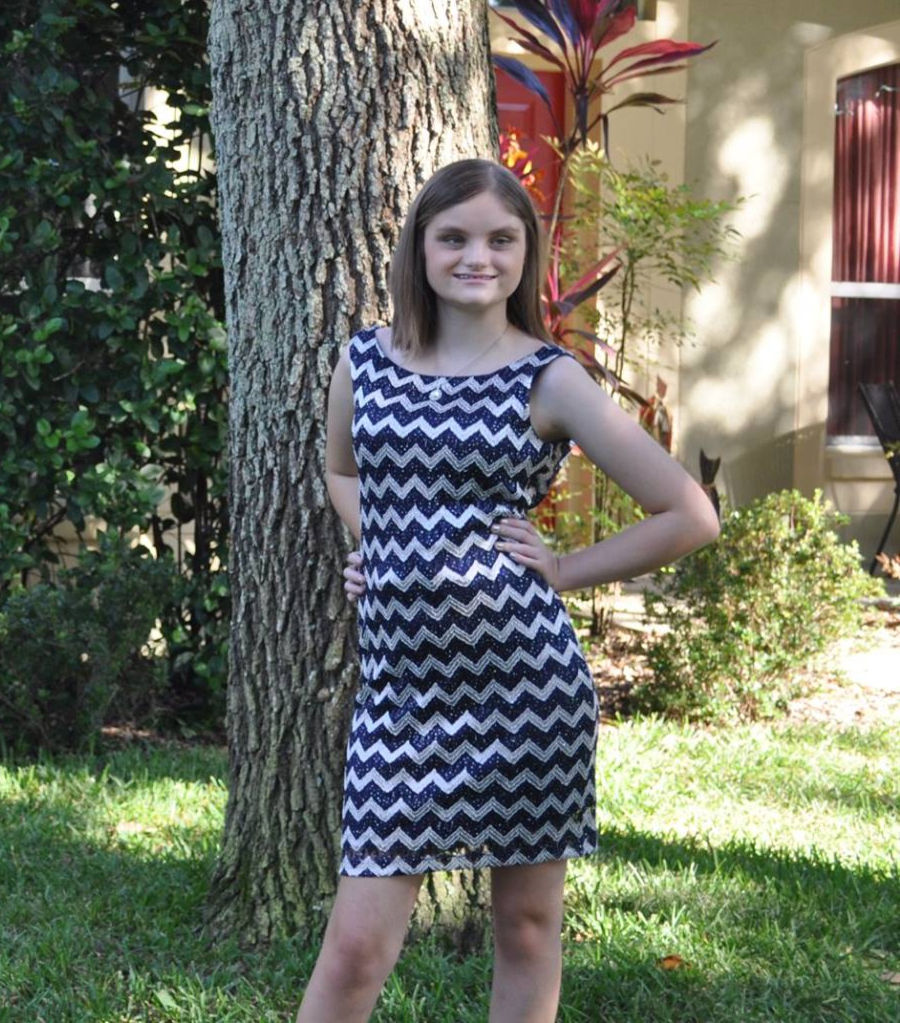
“Bring my cute outfit, Mom and something to hold this tube in. I’m going to school tomorrow,” she told me over the phone while John stayed overnight at the hospital. When a feeding tube is first placed, a long Foley catheter remains in the stomach for a few months until the tract heals. It’s bulky and awkward and easy to snag on everything. Halle wanted it hidden.
So I brought my slim running SpiBelt. It worked beautifully. She even used it to hide the tube under her homecoming dress a month later. No one knew.
That feeding tube gave us eleven more months with our sweet Halle Grace. During that time, she went to football games. She attended homecoming. She had sleepovers. She went on Girl Scout trips. We celebrated nearly a year of “lasts” ... holidays, birthdays, ordinary evenings together. Something so small and so simple had given her life at the beginning of her story and sustained her life at the end.

In honor of Feeding Tube Awareness Week, Janine and I talk about Halle’s journey with a feeding tube, but we also dive deeper into Morgan’s story and how tube feeding shaped her life in ways people may not expect. To truly understand the impact, you’ll want to hear the full conversation on the podcast.
Feeding tubes weren't the path we would have chosen for our children.
But we are deeply grateful for the time it gave us.
To hear more, listen to Strength Happens Episode:More than a Tube: Our Journey to Acceptance, Learning, and Advocacy.


Comments